The history of government policy on franchising in Malaysia began to take shape in the 1990s, when franchising was increasingly viewed as a tool for entrepreneur development, SME growth, Bumiputera commercial participation and the creation of homegrown Malaysian brands.
At that stage, franchising was still relatively new in Malaysia, although certain businesses such as petrol stations, automotive dealers, Singer, Bata and early food brands such as KFC, McDonald’s and A&W had already operated in franchise-like, distributorship, dealership or licensing-style structures well before the 1990s. However, the change in 1992 meant that franchising began to be treated not merely as a private business expansion method, but as part of a national development agenda.
In November 1992, the Government introduced the Franchise Development Programme, or FDP, under the Implementation Coordination Unit of the Prime Minister’s Department. This became one of the most important turning points in the Malaysian franchise industry, as it marked the beginning of a more formal Government-led effort to use franchising as a tool to develop entrepreneurs, SMEs, Bumiputera participation and homegrown Malaysian brands.
In 1994, the Malaysian Franchise Association, or MFA, was established to support the implementation of the Government’s franchise development programme. MFA became an important industry body to promote franchising, provide awareness, create networking opportunities and connect franchisors, franchisees, consultants and Government agencies. Also on the same year, FIM was introduced and eversince became a platform for franchisors, franchisees, investors, Government agencies, consultants, financiers and international brands to meet under one roof. It was not merely an exhibition of brands. It became a practical platform for franchise promotion, franchise education, business matching, international networking and the public understanding of franchising.
In 1995, the Franchise Development Programme was transferred to the Ministry of Entrepreneur Development. This reflected the Government’s view that franchising was primarily an entrepreneurship development tool. The focus was not only on regulating franchises, but also on creating more franchisors, franchisees and local franchise brands.
A major legal milestone came in 1998, when the Franchise Act 1998 was passed. The Act received Royal Assent on 24 December 1998, was published in the Gazette on 31 December 1998, and came into operation on 8 October 1999. This changed the Malaysian franchise landscape became a regulated industry with requirements relating to registration, disclosure documents, franchise agreements, operations manuals, training manuals, renewal, termination and compliance.
During the 8th Malaysia Plan period from 2001 to 2005, franchising was identified as one of the growth areas for structural change and upgrading of the distributive trade industry. Government resources were channelled to promote, market, train and finance the Franchise Development Programme. This was the phase where franchising was increasingly treated as a serious national economic development tool.
During the 9th Malaysia Plan period from 2006 to 2010, the role of PERNAS, then commonly referred to in older materials as PNS, became increasingly important. PERNAS played the role of a franchise development agency by supporting the industry through financing, franchise investment, training, networking, promotional activities, franchise development and research and development. In simple terms, while the Ministry provided the policy direction and the Registrar regulated the industry, PERNAS became one of the main implementation and development arms on the ground.
In 2009, following a Cabinet reshuffle, the Ministry of Entrepreneur and Co-operative Development was abolished, and the Franchise Development Division was transferred to the Ministry of Domestic Trade, Co-operatives and Consumerism, commonly known as KPDNKK. This was another important shift. Franchising was still about entrepreneurship, but it was also increasingly viewed from the perspective of domestic trade, market conduct, registration, enforcement and consumer confidence.
Over time, the ministry name evolved from KPDNKK to KPDNHEP, and later to KPDN, reflecting changes in Government structure and policy priorities. However, the underlying position remained the same: franchising sits between two worlds. On one side, it is an entrepreneurship and SME development tool. On the other side, it is a regulated business model involving disclosure, investment, brand control, franchisee protection and market governance.
Another major legal and administrative development took place on 28 April 2022, when the latest major amendments to the Franchise Act came into operation. These amendments strengthened the franchise registration framework and introduced more stringent requirements and penalties. Following this, MyFEX 2.0 was unveiled on 28 July 2022 as the new system for franchise registration, replacing the earlier MyFEX 1.0 system.
On 12 December 2023, all matters relating to franchise were placed under the jurisdiction of the Ministry of Entrepreneur and Cooperatives Development, or KUSKOP. This brought the franchise portfolio back closer to the entrepreneurship development agenda. Under KUSKOP, the focus was again strongly linked to entrepreneur capacity building, franchise ecosystem development and the expansion of Malaysian franchise brands.
In early 2025, the National Franchise Policy 2030, or DFN 2030 was introduced and was launched in Kuala Lumpur in conjunction with the PERNAS International Franchise Festival 2025. DFN 2030 was intended to strengthen the national franchise ecosystem and expand market access locally and internationally. Its pillars included improving policy and governance, promoting franchising as a preferred business model, enhancing the capacity of franchise entrepreneurs, improving access to financing and increasing market penetration.
Together with MFA through training and development, PERNAS helped to give practical effect to Government policy by preparing entrepreneurs to become franchise-ready and by assisting franchisors and franchisees in their growth journey.
Now, in May 2026, it was announced that franchise has shifted from KUSKOP to KPDN. The recent 33rd FIM, YB Datuk Armizan bin Mohd Ali, Minister of Domestic Trade and Cost of Living, announced the shift of the franchise portfolio back to KPDN. This marked another important administrative development in Malaysia’s franchise journey, showing once again that franchising sits between two policy dimensions: entrepreneur development and domestic trade regulation.
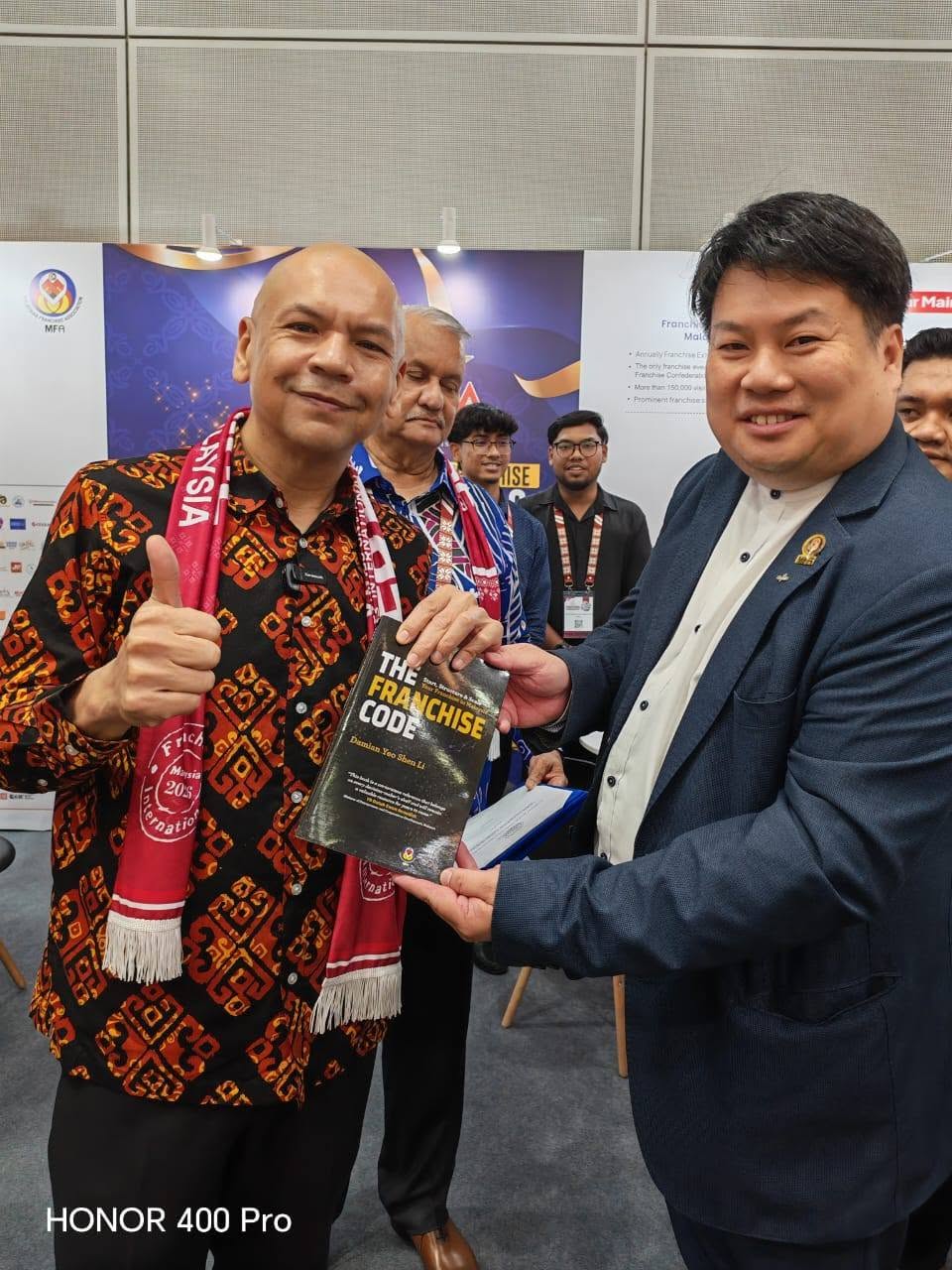
And at night during the FIM Opening Cocktail, YB Steven Sim Chee Keong, Minister of Entrepreneur Development and Cooperatives, continued to express support for the franchise ecosystem, reflecting the continuing importance of entrepreneurship development even as the regulatory administration moved back to KPDN.

During the KPDNKK / KPDNHEP / KPDN period, the Franchise Development Division became the key administrative body for franchise registration, development, administration and enforcement. The Registrar of Franchise operated under this framework, and franchisors were required to submit the disclosure document, franchise agreement, operations manual, training manual and other supporting documents as part of the registration process.
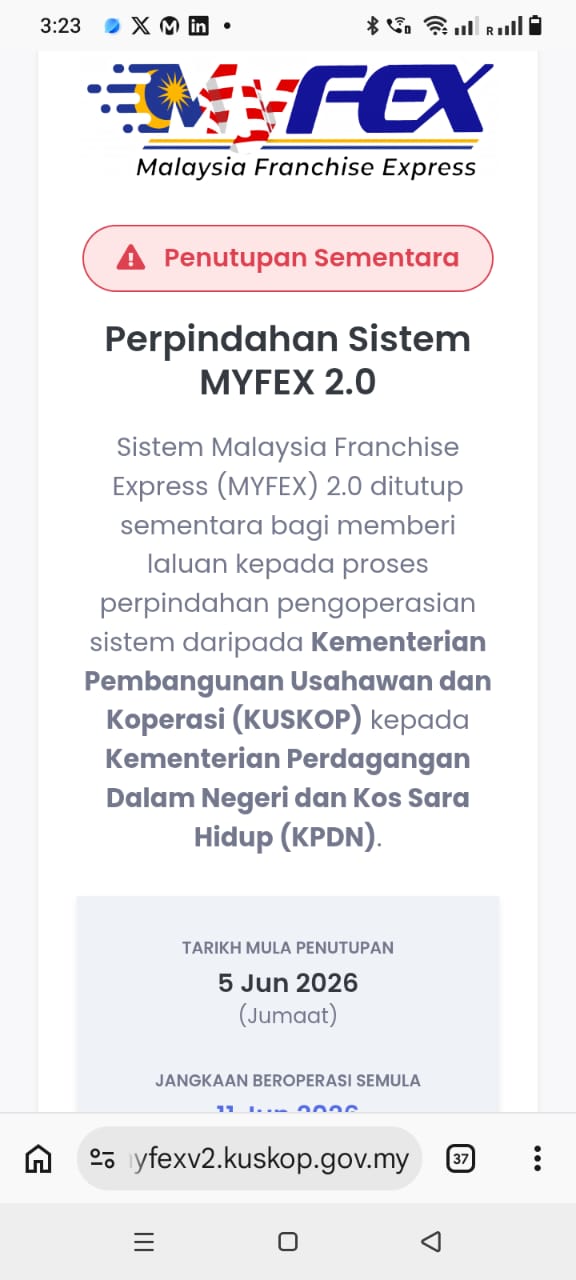
Now, with the MyFEX 2.0 migration notice in June 2026, the system is being migrated from KUSKOP back to KPDN. The announcement states that MyFEX will be temporarily closed from 6 June 2026 to 10 June 2026 for migration from KUSKOP to KPDN, with operations expected to resume on 11 June 2026.
With this migration, the industry hopes for a more efficient, transparent, industry-responsive and user-friendly registration system, particularly in relation to the processing of franchise applications, updates to franchise documents, communication with applicants, and the overall administration of franchise compliance. Good Luck MyFex2.0 and KPDN.