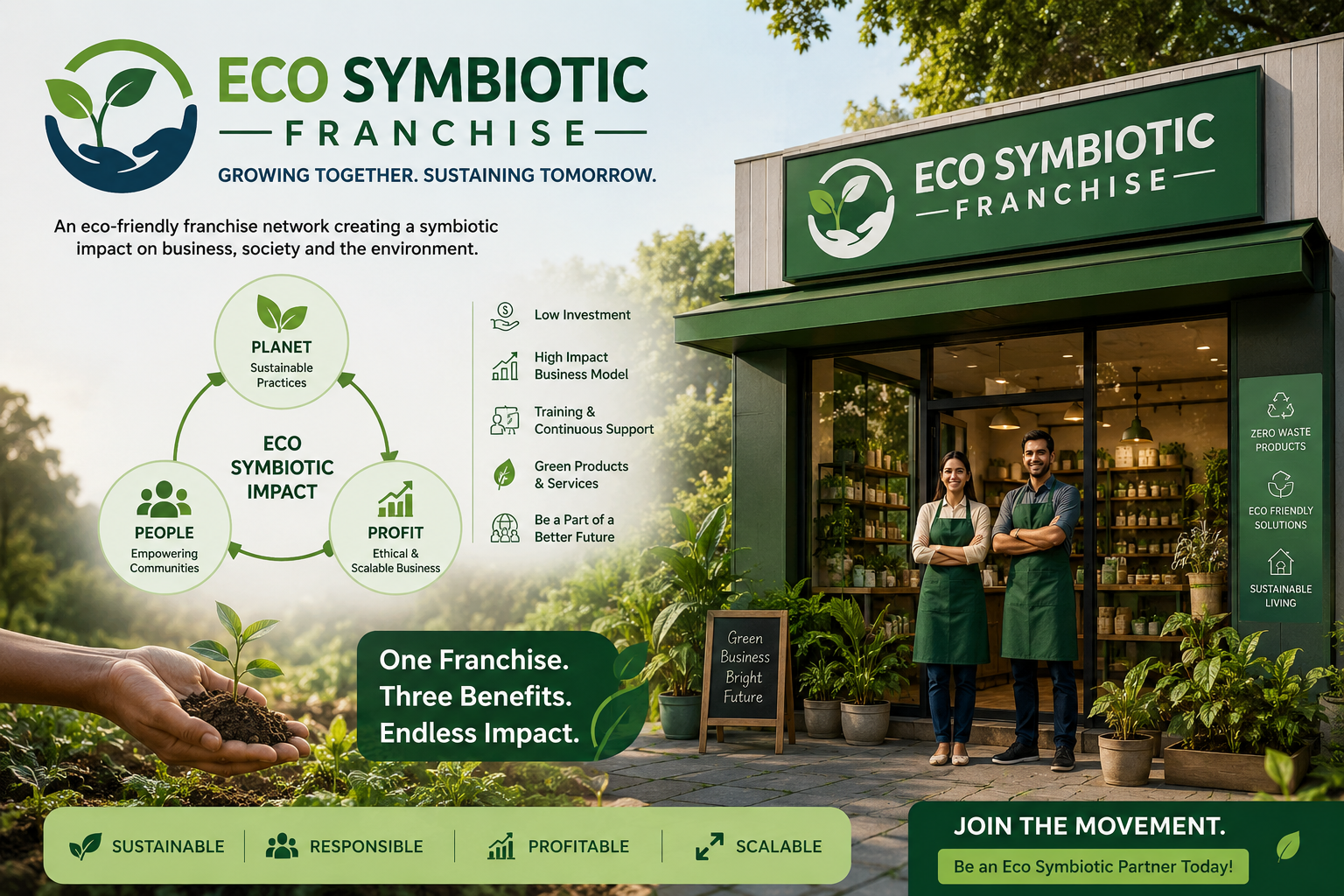
It happened recently, a conversation that perfectly captures my passion for franchising and innovation. A client, who had seen an earlier article of mine on the Eco-Symbiotic Franchise Model, came to me with an insightful question. “This concept is fascinating,” they said, “especially the agro-based examples like durian. But can it truly extend beyond farming? I believe anything is franchisable, but how would an Eco-Symbiotic model work for industries like renewable energy or waste-to-energy?”
My answer, as always, was an emphatic YES. In fact, it’s precisely in these complex, purpose-driven sectors that the Eco-Symbiotic Franchise Model shines brightest, proving that my belief – that anything is franchisable – is not just an idea, but a tangible path to innovation and sustainable growth.
My exploration into the Eco-Symbiotic Franchise Model began with observing nature. Just as diverse species in an ecosystem rely on each other for survival and growth, I realized that franchise networks could be structured to achieve the same profound mutualism.
At its core, this model is built on these foundational pillars, which I believe are key to unlocking universal franchising potential:
The Eco-Symbiotic Franchise isn’t confined to fields and orchards. Its power lies in its universal principles: fostering deep partnerships, integrating entire value chains, championing sustainability, and creating true mutual benefit. It’s about building interconnected business ecosystems, much like nature itself.
- Mutual Benefit & Reciprocal Growth: I see the franchisor not just as a provider of a system, but as the architect of an ecosystem. They offer the foundational technology, brand, and standards. Franchisees are the vital local operators, bringing invaluable market insights, operational execution, and crucial on-the-ground feedback. Success is a shared journey.
- Integrated Value Chains: This is where the adaptability truly shines. I break down the entire process—from initial input or raw material to the final customer experience—and ensure every step is interconnected. This creates efficiency, enhances quality, and crucially, embeds sustainability.
- Embedded Sustainability: For me, sustainability isn’t an optional add-on; it’s a core design principle. The Eco-Symbiotic model inherently promotes environmental responsibility, ethical practices, and community well-being, ensuring that the businesses we build are not only profitable but also beneficial for the long term.
- True Partnership & Co-Creation: I foster an environment where franchisees are active contributors, driving innovation based on real-world experiences.
Illustrating the Model: From Durian Fields to Diverse Futures
My exploration into the Eco-Symbiotic Franchise began with agriculture, where the value chain integration is strikingly clear. This approach moves us from a simple “Plant → Harvest → Sell” model to a comprehensive “Plant → Harvest → Process → Brand → Retail → Recycle → Replant → Scale” ecosystem.
Agro-Based Synergy: From Plantation to a Complete Value Chain
The power of the Eco-Symbiotic Franchise is beautifully illustrated when we look at how diverse agricultural products can form integrated value chains. My vision is to create ecosystems where every stage, from cultivation to waste utilization, is interconnected and mutually beneficial.
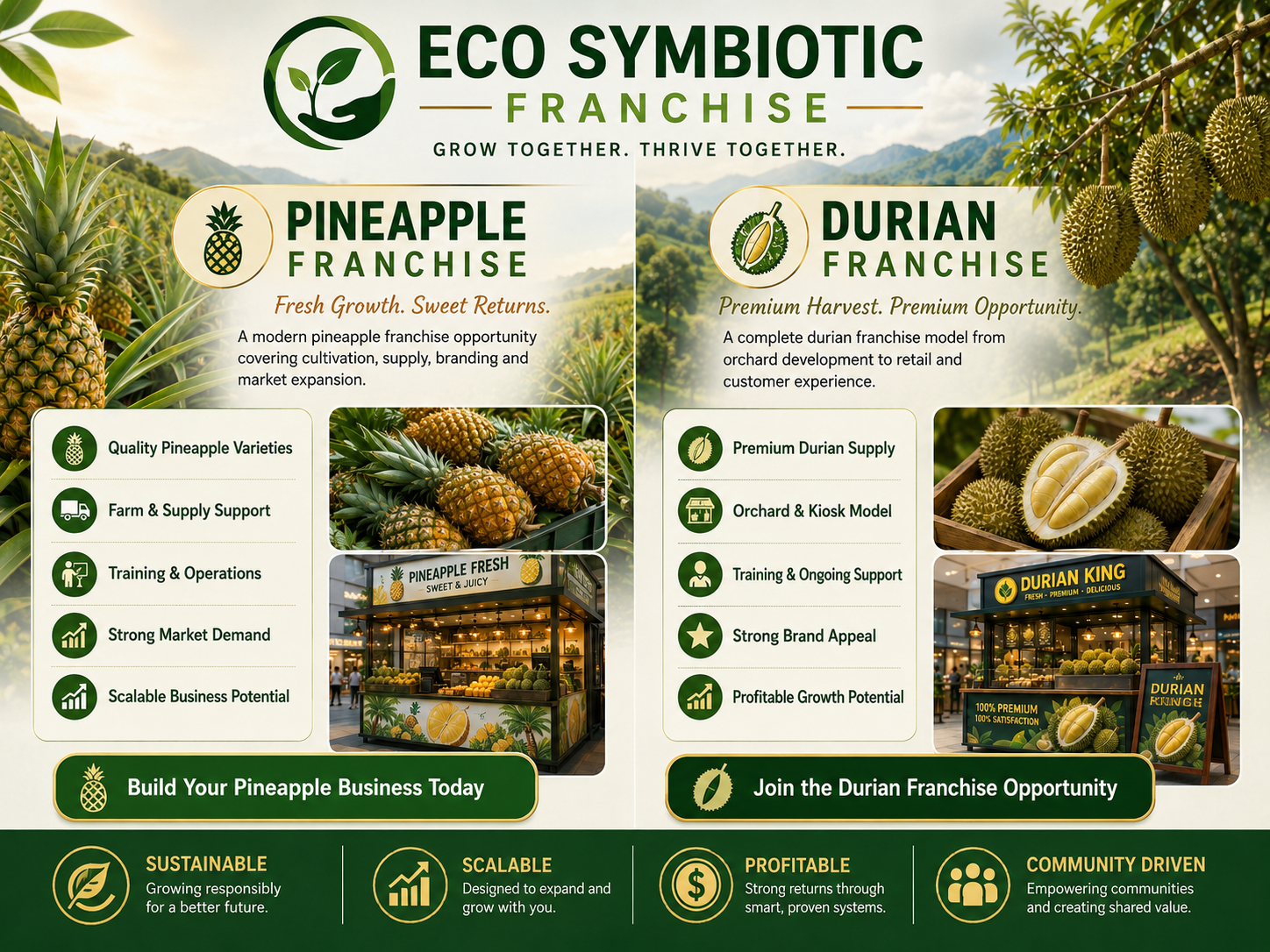
Durian Dynasty: From Orchard to Oasis Consider a durian franchise. My vision for an “Eco-Symbiotic Franchise Ecosystem” is about more than just selling fruit. It’s about integrating the entire journey:
Cultivation Partners: Franchisees manage orchards, adhering to my strict, sustainable farming practices and quality standards for specific varieties like Musang King. They benefit from my expertise and guaranteed market access.
Processing & Retail Innovators: Other franchisees take that premium durian and create value-added products—artisanal ice cream, pastes, or beverages—or operate specialized retail outlets. They leverage my brand and recipes.
The Symbiotic Link: This creates a powerful loop. Growers supply quality fruit, processors create desirable products, and retailers engage customers. Feedback from retail informs cultivation and processing, making the entire network responsive and profitable. This isn’t just a franchise; it’s a living durian ecosystem.
Pineapple’s Integrated Journey: Plantation to Waste Utilization Pineapple farming offers another compelling agro-based illustration, perfectly demonstrating the extended value chain from plantation right through to waste utilization. This showcases the transition from a simple agricultural product to a fully integrated business system.
Plantation Layer: Franchisees manage land, following my specific cultivation protocols for high-quality varieties. They receive superior seeds, agronomic advice, and a guaranteed market.
Processing Layer: Pineapple produce is transformed into juices, dried snacks, or even industrial materials from leaves. This adds significant value beyond raw produce.
Branding Layer: A unified brand ensures consistent quality and trust across all products.
Retail Layer: This includes branded kiosks, farm shops, online platforms, or supermarket sales, bringing the products directly to consumers.
Waste Utilization Layer (Circular Economy): Crucially, pineapple waste (peels, crowns, leaves) is repurposed. This can range from producing compost for the plantations, creating animal feed, or even generating biomass for energy. This circular approach is fundamental to sustainability. The connection is clear: the plantation provides raw material, processing adds value, retail sells the product, and waste utilization creates new resources, potentially feeding back into the plantation or energy generation. This integrated model ensures efficiency, sustainability, and diverse revenue streams for all involved.
Other Agro-Examples: This integrated thinking applies broadly. Think of specialized ginger cultivation where growers supply processing units for health products and retail outlets. Or sustainable coffee franchises linking ethical farmers directly with roasters and cafes, ensuring quality and fair practices from bean to cup. We can also envision aquaculture operations integrated with processing and retail, or organic vegetable farms connected to localized distribution and farm-to-table restaurants. In each case, the goal is to create a complete value chain that benefits all partners and minimizes waste.
Extending the Symbiosis: Beyond Agriculture’s Embrace
My belief that “anything is franchisable” truly comes alive when we apply these Eco-Symbiotic principles to sectors beyond farming. The core idea—creating interconnected, mutually beneficial, and sustainable networks—is universally powerful. Examples:-
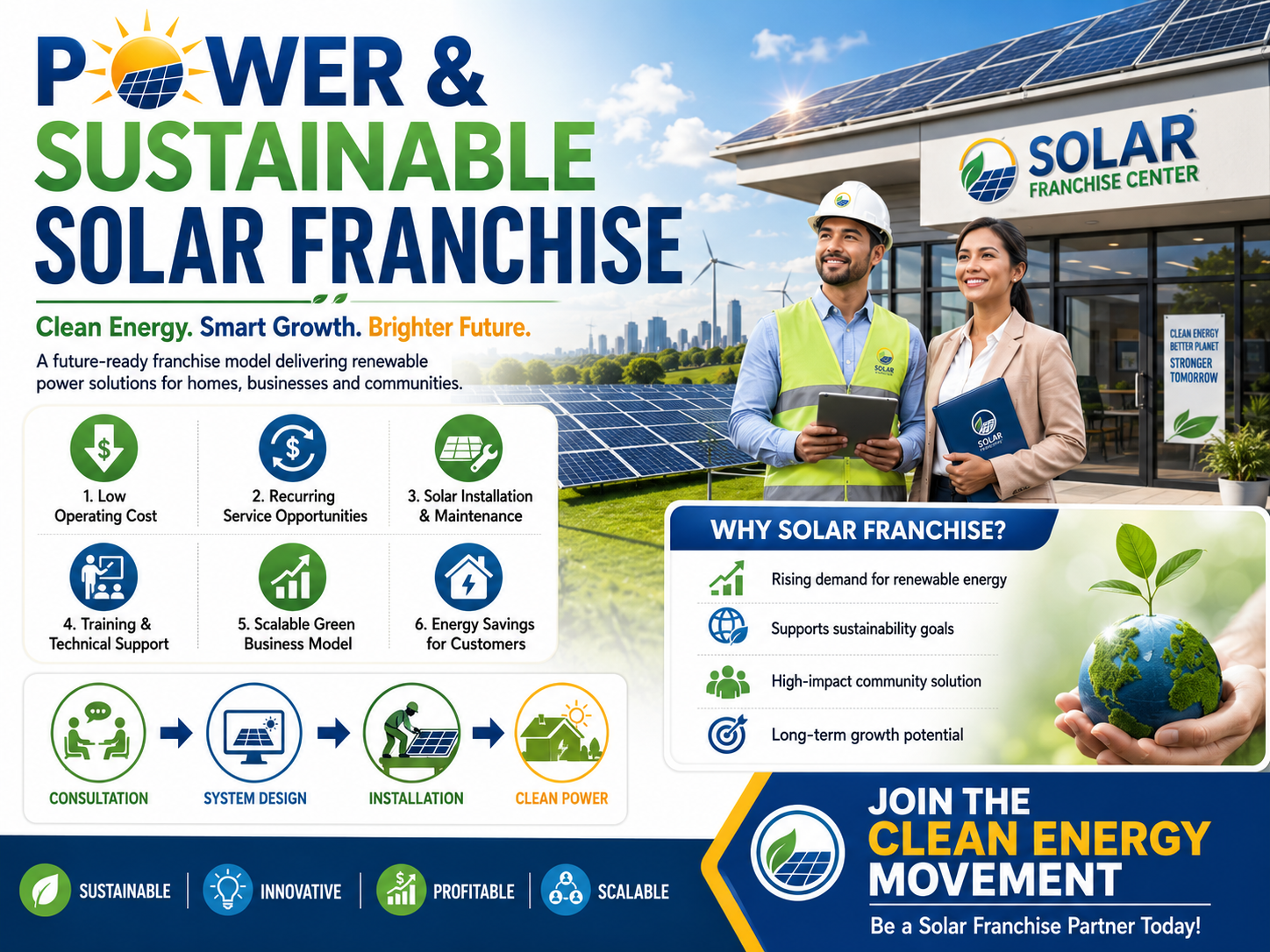
Powering a Sustainable Future: Renewable Energy Franchises
The renewable energy sector is a natural fit for the Eco-Symbiotic model, combining technological innovation with localized service and a clear sustainability mandate.
The Vision: To democratize clean energy by creating a network of specialized partners.
Franchisor Role (The Energy Innovator & Standards Setter): Provide the proprietary technology (solar, wind, storage), rigorous operational standards, supply chain access, and comprehensive training. The brand represents reliability and environmental stewardship.
Franchisee Roles (The Local Energy Hubs): Franchisees become community energy experts, perhaps specializing as certified installers, project developers, community energy managers, or even recycling specialists for old equipment.
The Symbiotic Connection: Franchisor offer technology and brand trust; franchisees deliver local expertise, service, and vital feedback. Their success builds brand’s reputation, and R&D empowers them. Imagine a franchisee identifying a need for community solar projects, which then informs my next technological development. It’s a powerful synergy driving widespread clean energy adoption.
Turning Waste into Wealth: Waste-to-Energy (WTE) Franchises
The global challenge of waste management is precisely the kind of complex problem the Eco-Symbiotic model can transform into an opportunity.
The Vision: To create a decentralized network that efficiently collects waste, converts it into energy and valuable byproducts, and distributes that energy, all while minimizing environmental impact.
Franchisor Role (The Technology & Systems Integrator): Provide advanced WTE technologies, waste stream analysis expertise, operational frameworks, and strategies for byproduct utilization.
Franchisee Roles (The Local Resource Managers): Franchisees can operate different nodes: waste collection and sorting centers, WTE processing plants, byproduct management specialists, or energy distribution partners.
The Symbiotic Connection: Franchisor offer the core technology and system blueprint. Franchisees secure local waste streams and operate processing facilities, generating energy and resources. They feed operational data and market insights back to me for optimization. Crucially, franchisees can also connect with each other: collection units supply processing plants, which in turn supply energy to distribution partners. This creates a powerful closed-loop system, turning waste into valuable resources and clean energy.
My Passion: Franchising a Sustainable Future for All
My conviction that “anything is franchisable” is fueled by seeing how the Eco-Symbiotic model can be applied universally. It allows us to build businesses that are not only scalable and profitable but also deeply integrated, resilient, and purpose-driven. By understanding the entire value chain—whether it’s from the durian orchard to the ice cream parlor, from the pineapple plantation to its waste-to-energy potential, from the solar panel installation to the community micro-grid, or from waste collection to energy generation—we can create powerful networks that benefit everyone. The Eco-Symbiotic Franchise Model is my testament to this vision: cultivating growth together, responsibly and for a better future.
Its untested. But nothing is impossible