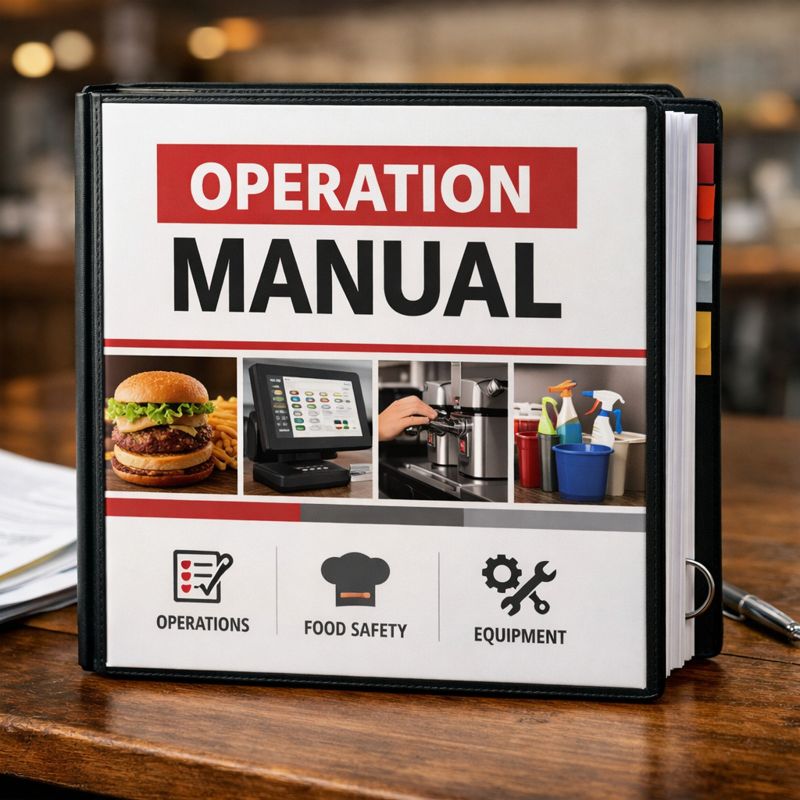
In the Malaysian franchise registration system, the application for a franchise licence is governed under Section 7 of the Franchise Act 1998. For ease of reference, allow me to reproduce Section 7 as follows:
Application for registration
7. (1) A franchisor shall make an application to register his franchise by submitting to the Registrar the application in such form as may be determined by the Registrar together with the prescribed fee and—
(a) the complete disclosure documents with all the necessary particulars filled in;
(b) a sample of the franchise agreement;
(c) the operation manual of the franchise;
(d) the training manual of the franchise;
(e) a copy of the latest audited accounts, financial statements, and the reports, if any, of the auditors and directors of the applicant; and
(f) such other additional information or documents as may be required by the Registrar for the purpose of determining the application.
This statutory provision makes it clear that both the Operations Manual and the Training Manual are mandatory documents for franchise registration in Malaysia. They are not optional, nor are they interchangeable.
Beyond registration, these manuals also form part of the mandatory pre-contractual disclosure. They must be provided to a prospective franchisee at least ten (10) days before the franchise agreement is signed. This alone ‘shows off’ their importance within the franchise system (section 15 Franchise Act 1998).
The Role of Manuals in a Franchise System
In a franchise system, clarity of documentation is fundamental to consistency, replicability, and compliance. Two key manuals support these objectives: the Operations Manual and the Training Manual. While these documents are closely related and complementary, they serve different purposes and must be understood as distinct components of the franchise system.
The Operations Manual sets out the franchisor’s system in its authoritative form. It defines what must be done, what standards must be met, and what aspects of the business are subject to the franchisor’s control. This manual establishes the rules, procedures, and benchmarks that govern how the franchised business is to be operated on a daily basis. It is prescriptive in nature and forms part of the franchisor’s ongoing control over the franchise system, ensuring uniformity in brand presentation, service quality, operational processes, and regulatory compliance across all outlets.
The Training Manual, by contrast, focuses on the transfer of knowledge, skills, and expected behaviours required to operate the franchised business in accordance with the Operations Manual. It explains how tasks are to be performed, how personnel are expected to behave, and how competence is achieved and maintained. The Training Manual is instructional rather than regulatory. Its purpose is to equip franchisees and their staff with the practical capability to meet the standards laid down in the Operations Manual.
So, What Is the Difference?
Simply put, the distinction can be summarised as follows:
The Operations Manual is about the WHAT.
It answers the question:
What must be done, what standards must be met, and what is controlled?
The Training Manual is about the HOW.
It answers the question:
How to do it, how to behave, and how to perform competently.
This distinction reflects a core principle within franchising. The Operations Manual defines the system, while the Training Manual delivers the system. Together, they ensure that the franchise business is not only properly structured and controlled, but also capable of being consistently replicated by different operators in different locations.
Examples – Operations Manual – The WHAT
Opening and Closing of an Outlet
To illustrate this distinction clearly, let us look at how the opening and closing of an outlet is drafted differently in the Operations Manual and the Training Manual.
Opening and Closing of Outlet (10.00am to 10.00pm)
The Outlet operates from 10.00am to 10.00pm, or such other hours as may be approved by the Franchisor from time to time. The Franchisee must ensure that only authorised personnel carry out opening and closing duties. These procedures are intended to ensure operational readiness, consistency of brand standards, financial control, and the safety and security of the Outlet.
Before opening to customers, the Outlet must be unlocked and security systems deactivated in accordance with approved procedures. A basic safety check must be conducted, all required equipment and systems must be switched on and confirmed to be in working order, and the Outlet must be cleaned and prepared to meet hygiene and presentation standards. Stock levels must be checked, the opening cash float must be counted and recorded, and any discrepancies or irregularities must be reported immediately. The Outlet may only open to customers after all opening procedures have been completed.
At the end of the approved operating hours, business activities must cease in an orderly manner and closing procedures must be carried out by authorised personnel. All equipment must be shut down, cleaned, and secured, and all work and customer areas must be sanitised. Cash and sales records must be accurately completed, including closing the point-of-sale system and reconciling daily takings. The Outlet must then be fully secured by locking all access points and activating security systems. Compliance with these procedures is mandatory and subject to audit and enforcement under the Franchise Agreement.
Training Manual – The HOW
Opening and Closing of Outlet (10.00am to 10.00pm)
A. Opening the Outlet
Staff assigned to opening duties must arrive early enough to complete all tasks before customers arrive.
Steps to Open the Outlet:
- Arrive at least 30 minutes before operating hours
- Unlock the outlet and deactivate the alarm system
- Conduct a quick safety check for hazards or unusual conditions
- Switch on lights, equipment, and the point-of-sale (POS) system
- Check that all equipment is functioning properly
- Clean and prepare workstations, counters, and customer areas
- Check stock and supplies required for the day
- Count and record the opening cash float
- Report any issues or cash discrepancies to the manager immediately
- Ensure the outlet is fully ready before opening to customers
B. Closing the Outlet
Closing is done after the last customer has been served and trading has ended.
Steps to Close the Outlet:
- Stop service politely and clearly at closing time
- Clean and sanitise all work areas and equipment
- Store or dispose of food items according to safety rules
- Switch off and secure all equipment
- Close the POS system and print daily reports
- Count cash and reconcile sales
- Report any discrepancies to the manager
- Lock all doors and activate the alarm system
- Conduct a final check to ensure the outlet is clean and secure
C. Important Reminders for Staff
- Always follow the opening and closing steps in order
- Do not skip steps, even when busy or tired
- Report issues immediately; do not attempt to fix problems on your own
- Only trained and authorised staff may open or close the outlet
- Accuracy, honesty, and safety are critical at all times
D. Training Assessment
- Staff will be shown how to open and close the outlet by a supervisor
- Staff must practise under supervision before performing duties independently
- Only trained and approved staff may handle opening or closing duties
Conclusion
The above examples on opening and closing an outlet clearly demonstrate the distinct yet complementary roles of the Operations Manual and the Training Manual within a franchise system. The Operations Manual establishes what must be done, the standards that must be met, and the areas subject to the franchisor’s control. It serves as the authoritative reference that ensures consistency, accountability, and compliance across all outlets.
The Training Manual translates those standards into practical, day-to-day guidance. It explains how tasks are to be performed, how staff are expected to behave, and how competence is achieved through instruction and practice. While the Operations Manual protects the system and the brand, the Training Manual equips people to operate the system effectively.
Together, these manuals demonstrate a complete, transferable, and controllable franchise system. By clearly separating operational standards from training instruction, a franchisor reduces confusion, strengthens compliance, and supports sustainable and scalable franchise growth.